Preparing for launch in Istanbul
JetTransfer is a booking and dispatch platform for private ground transfers — airport pickups, hotel transfers, city tours and intercity trips. A hotel or agency books the trip. It goes only to drivers who are on shift, in range, and permitted to drive a vehicle with enough seats. Everyone involved can see where it stands until the passenger is delivered.
Arriving · 12 min
Why we built it
A guest needs a car at 06:40. The front desk messages a driver they know. He might be free, and the car he is in might have enough seats. Nobody records the price that was agreed, nobody knows the trip happened until someone asks, and when the passenger list matters — at the airport, in an inspection — it is on a scrap of paper.
Six passengers get sent a four-seat car, and the mistake surfaces at the kerb rather than at booking time.
Whether a driver accepted, arrived or finished is knowable only by asking somebody.
The agreed price, who booked it and which passengers travelled leave no record anyone can go back to.
How a booking works
The booking flow asks for what a driver actually needs to do the job, and refuses to submit a trip that cannot be served.
Instant or scheduled; a single transfer, a multi-day booking, a city tour or an intercity run. The rest of the form follows from this — a city tour asks for stops, an intercity trip asks for the leg.
Pickup and drop-off with address autocomplete, saved places for the addresses you use constantly, and a map picker when an address will not do. Intermediate stops are kept separate from the endpoints, so a route can be reused without disturbing where it starts and ends.
Passenger count, vehicle class and how many vehicles. Where a group is larger than one vehicle can carry, the booking is split into linked trips across vehicles rather than quietly overfilling one.
The price you are offering, the route, the capacity and anything still missing, in one panel. Drafts autosave as you go, so a booking half-built on a phone at the desk is still there afterwards.
Dispatch
A trip is not broadcast to everyone with the app. It is offered to drivers who pass every one of these at the moment of dispatch — which is the difference between an offer and a guess.
The first driver to accept takes the trip. If nobody does, the booking is not left hanging: it returns to the dispatcher to place by hand or to reissue.
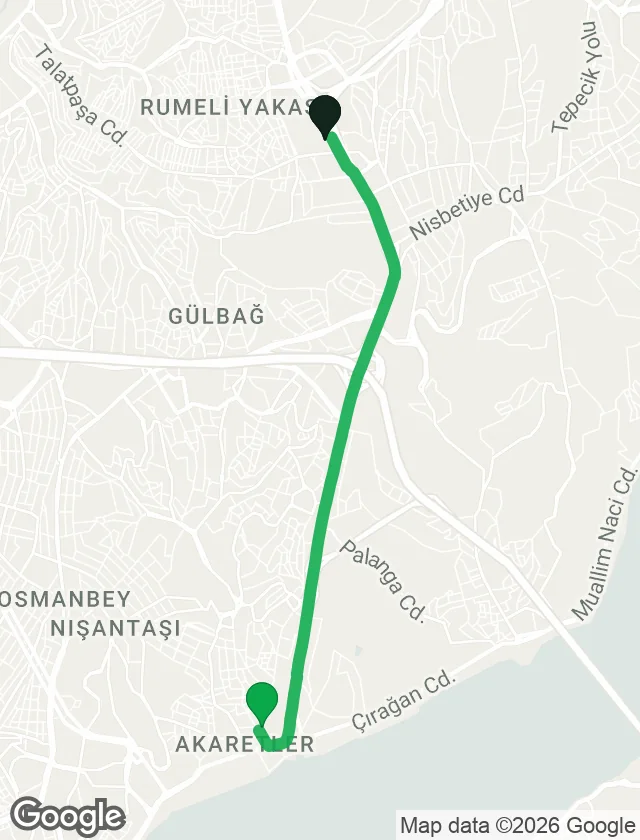
Both the booker and the driver watch the same trip move through those stages, live, with the driver's position on the map while it is running. A cancellation releases the driver and the vehicle immediately.
The airport run, end to end — and the same trip both the booker and the driver are watching.
Passengers
Turkish passenger transport requires a name, a nationality and an identity document for every passenger, and the driver is the one at arrivals holding the sign and checking documents at the door.
Identity document numbers are encrypted at rest. They are not part of the ordinary booking record and are not visible to everyone in a company.
A driver can read the identities for a trip they are assigned to, and nothing else — not the company's passenger history, not another driver's trip.
Each disclosure writes an audit entry naming the driver, the passenger and the time. If the record cannot be written, the documents are not shown.
Retention policies remove identity data on schedule, with the deletion enforced in the database rather than trusted to the application.
JetTransfer does not file passenger data with the Ministry on an operator's behalf. Drivers collect and present identity themselves; what the platform does is hold it properly and hand it to the right person at the right moment.
Work that repeats
Keep a booking you make often — route, vehicle class, passenger count — and start from it instead of from an empty form.
Daily or weekly crew runs generated ahead of time, so the booking exists before anyone has to remember it.
Dates a recurring run should skip, kept per company, so a public holiday does not create a car nobody needs.
Who it is for
Opening these writes an audit entry naming you, the passenger and the time.
Book for guests, reuse routes, see what is running today and what is coming, and keep a record of what was arranged and by whom.
Run vehicles and drivers, decide who may drive what, and dispatch or override by hand when a trip needs a person to place it.
Offers that fit the vehicle you are actually in, the passenger details you need at arrivals, and a clear view of the trip you accepted.
Payment
The booker states the price they are offering for the trip, the driver accepts it or does not, and the two settle directly. JetTransfer does not collect, hold or process payment. What the platform keeps is the record of what was agreed, attached to the trip it belongs to.
Questions
Not yet. We are preparing for launch in Istanbul, with Antalya, Izmir and Bodrum to follow. If you run transfers in any of those and want to be early, write to us.
Turkish and English throughout — the apps, and the notifications the platform sends. A person's language follows their account rather than the device that happens to be in their hand.
No. Vehicles are registered with their class and seat count — from a Vito to a Sprinter, minibus or coach — and capacity is matched to the booking. What matters is that the vehicle is registered to the company and the driver is permitted to drive it.
No. Every booking, driver, vehicle and passenger belongs to one company, and requests are refused across that boundary rather than filtered after the fact. How isolation works →
It stops being offered and comes back to whoever is dispatching, who can place it with a specific driver or reissue it. A trip is never left looking accepted when it is not.
Contact
We would rather build the last mile of this with operators who actually run transfers than guess at it. If that is you, we would like to hear how you work today.